What is a zamboni?
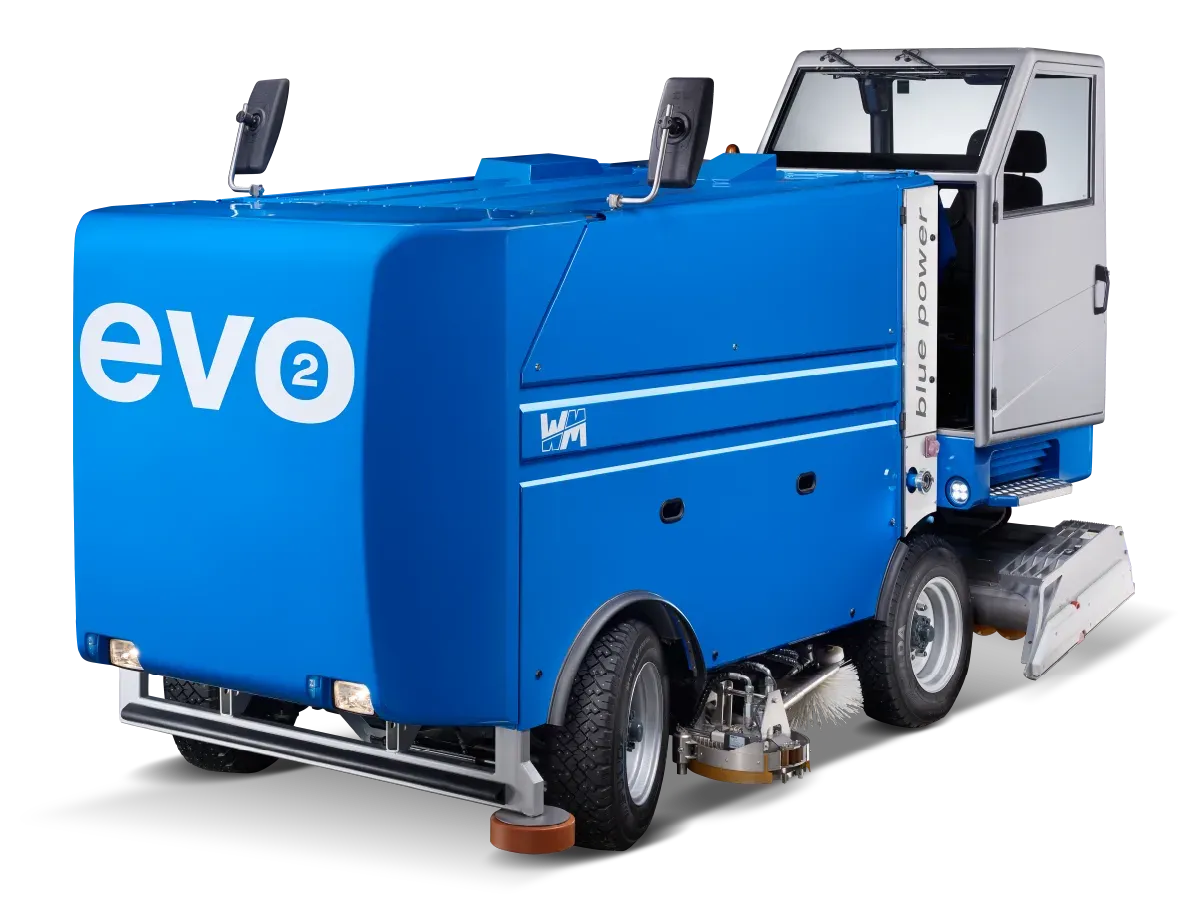
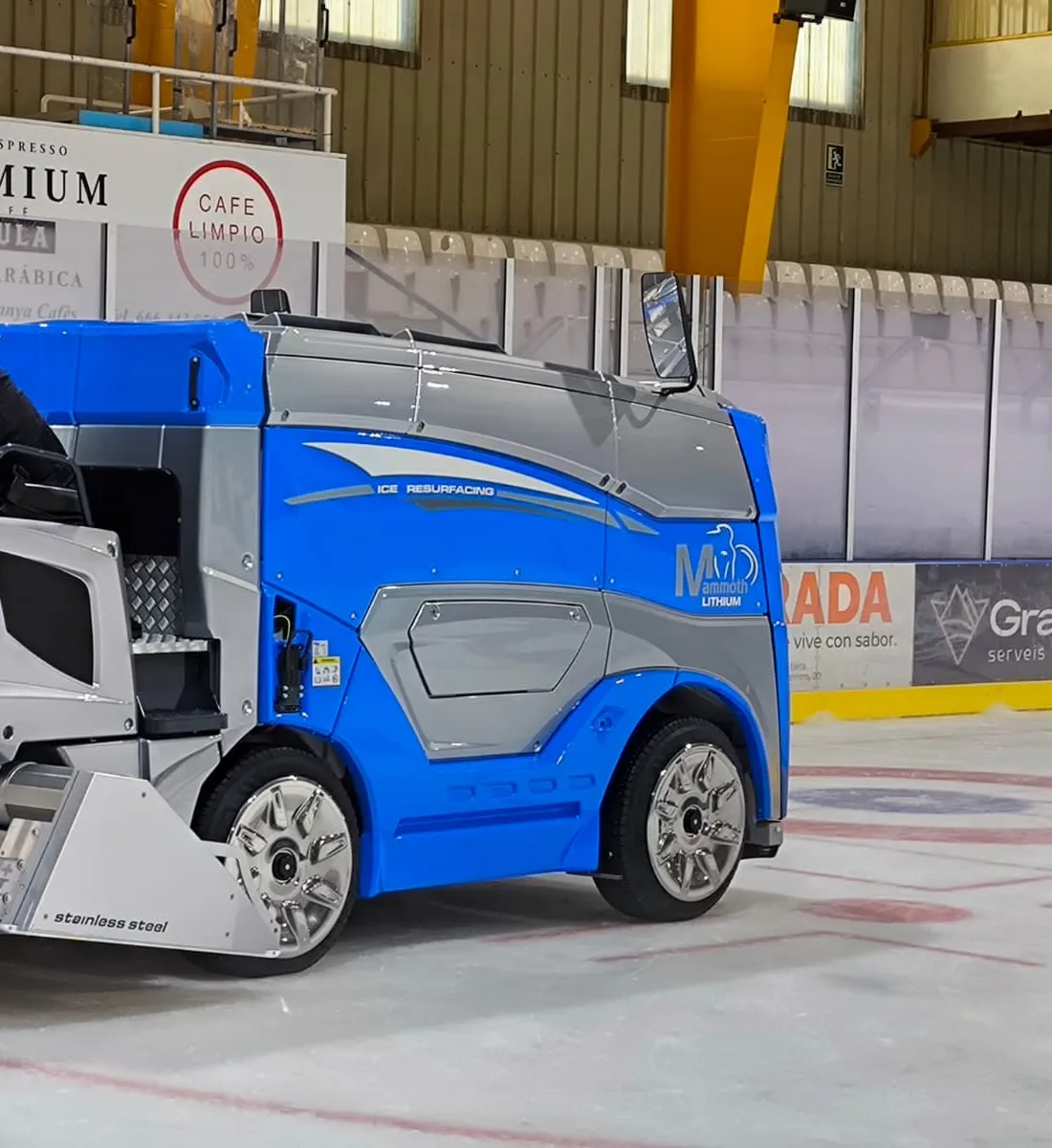
A zamboni is an ice resurfacer: the machine that drives around the rink between skating sessions and makes the ice smooth again. It is also called an ice resurfacing machine.
The name comes from Frank J. Zamboni, who built the first ice resurfacer in California in 1949. His surname is now a registered trademark of Frank J. Zamboni & Co., Inc., but it became so popular that many people use it for any ice resurfacer, whatever the manufacturer. The same has happened with other brands that ended up naming a whole product.
How an ice resurfacer works, step by step
Every ice resurfacer does the same job in a single pass:
- 1A very sharp blade under the machine shaves a very thin layer of ice and removes the skate marks.
- 2Screw conveyors collect the snow cut by the blade and carry it to the snow tank.
- 3Behind, the machine spreads a thin layer of warm water over the ice.
- 4The warm water slightly melts the surface, fills the grooves and freezes within a few minutes. The ice is left smooth and glossy.
The resurfacer covers the rink in slightly overlapping laps so that no strip is missed. When it has finished, the snow tank is emptied outside the rink.
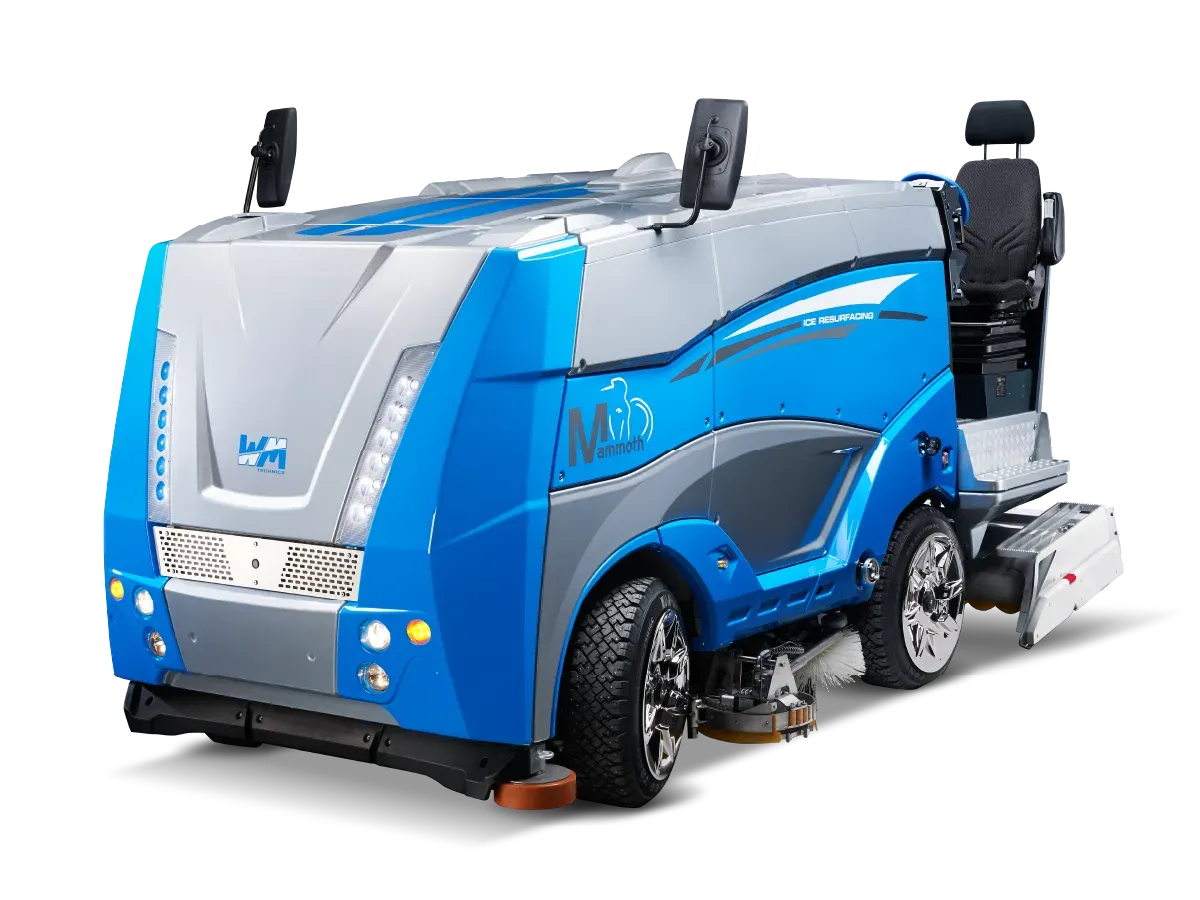
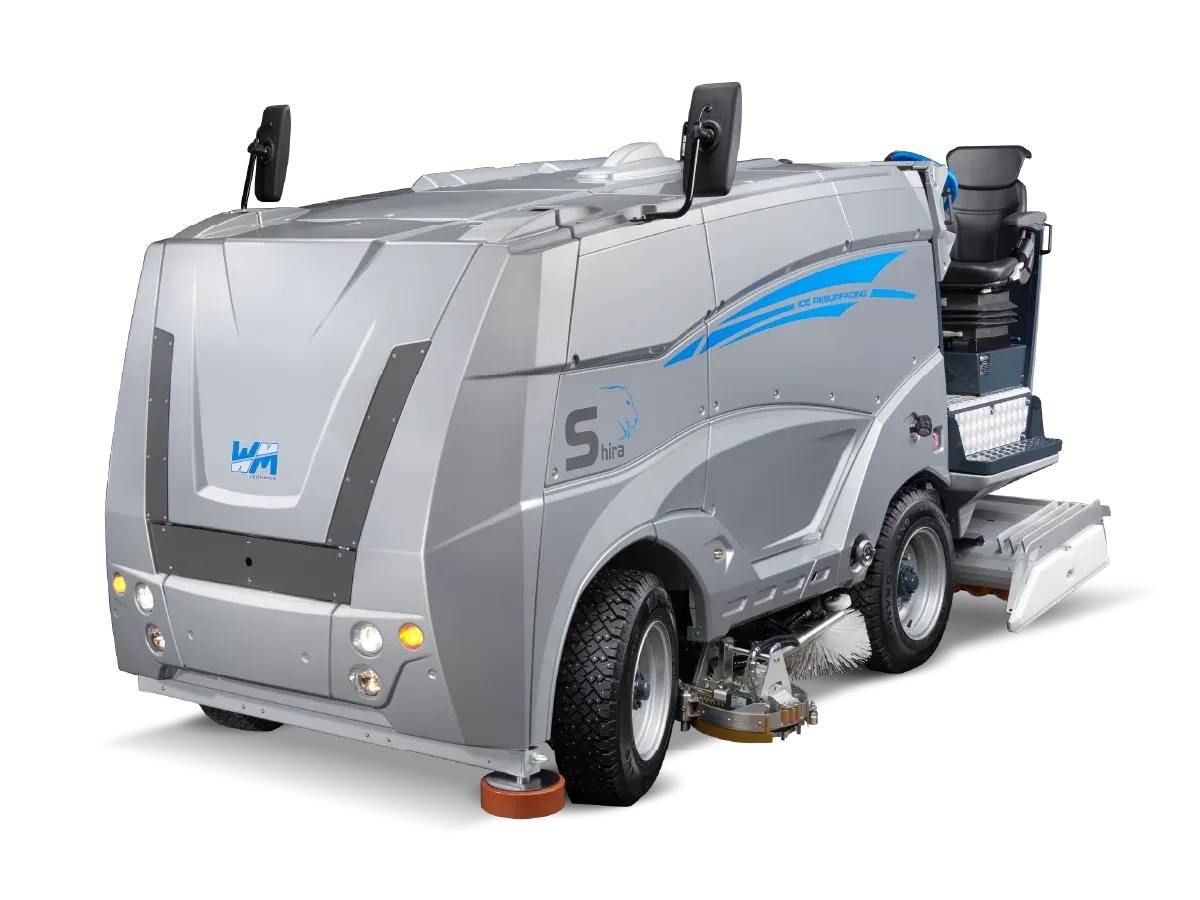
Spreading the water evenly is key to level ice. Traditional resurfacers drag a towel behind them to spread it. The WM Mammoth, WM Shira and WM Evo² can be fitted with the ICEplus system, which sprays the water through nozzles, with no towel, and leaves an even, uniform mirror finish on the ice. They can also be fitted with the Ice Wash system, which washes the ice with clean water right after the blade so it is left perfectly clean. WM offers both as options; at Very N'Ice we always include them on these three machines.
On top of that, the WM Mammoth, WM Shira and WM Evo² meter the water in proportion to their speed: the slower the resurfacer goes, the less water it lays, and the faster, the more. That way the rink is wetted evenly on the straights and in the curves.
The parts of an ice resurfacer
- Blade: shaves the ice. It is the part with the biggest effect on the result.
- Screw conveyors: collect the snow and lift it into the tank.
- Snow tank: holds the snow until it is emptied outside the rink.
- Water tank: carries the water spread over the ice.
- Edge cutter: shaves the ice along the boards. All WM resurfacers except the WM Pinguino have one.
- Water spreading system: lays the water on the ice, with a towel or, with the WM ICEplus system, through nozzles and with no towel.
- Wash system: with the WM Ice Wash system, nozzles wash the ice with clean water right after the blade.
- Motor: battery electric, diesel or petrol, depending on the model and version.
How often is the zamboni used?
It is usually run between skating sessions, once the ice has plenty of marks and loose snow. At hockey games it goes out before the game and between periods.
The more the rink is used, the more passes are needed. That is why tank capacity and the time each pass takes matter on busy rinks.
Which zamboni does my rink need?
The model depends mainly on the ice surface, and then on whether the rink is indoor or outdoor. These are the WM technics ice resurfacers we sell:
| Machine | Versions | Rink surface |
|---|---|---|
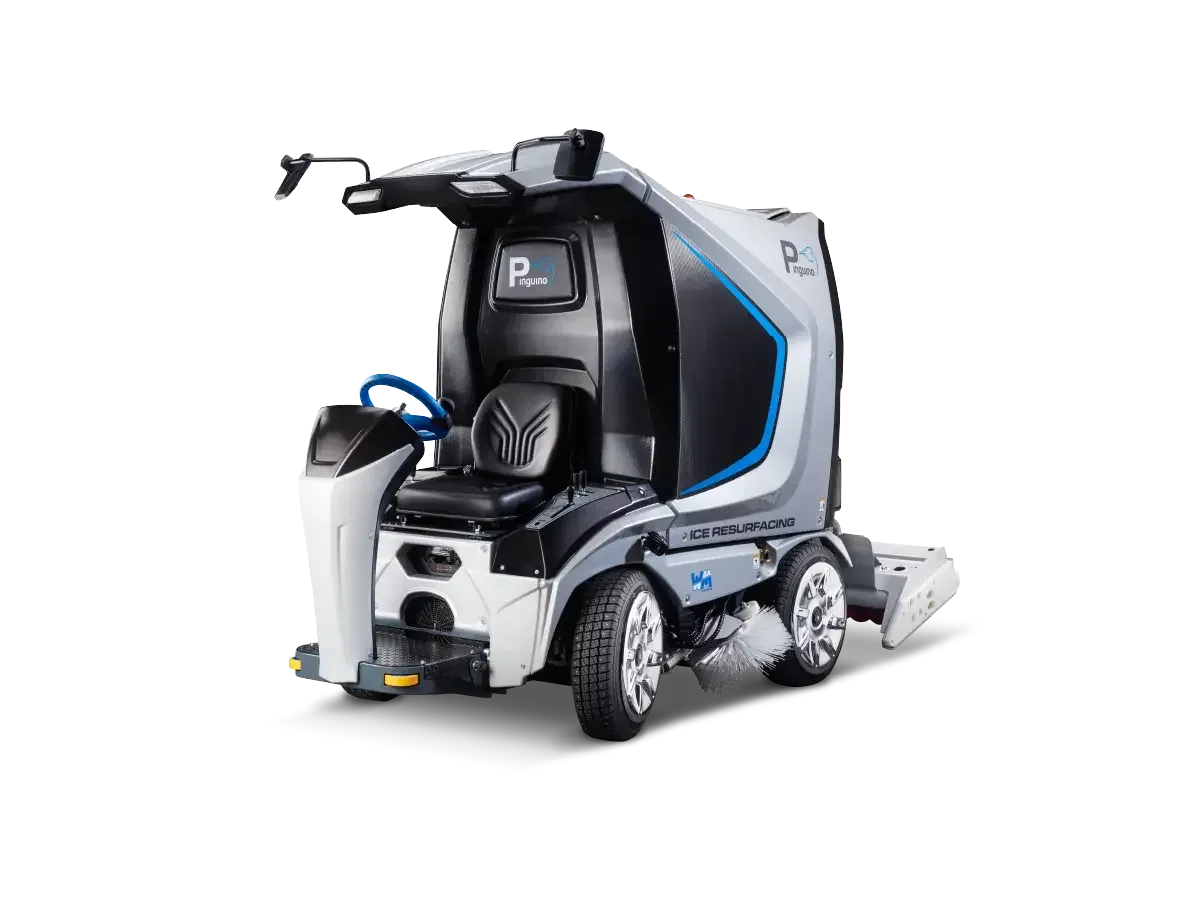
| WM Pinguino | Lithium electric or petrol | Up to 800 m² |
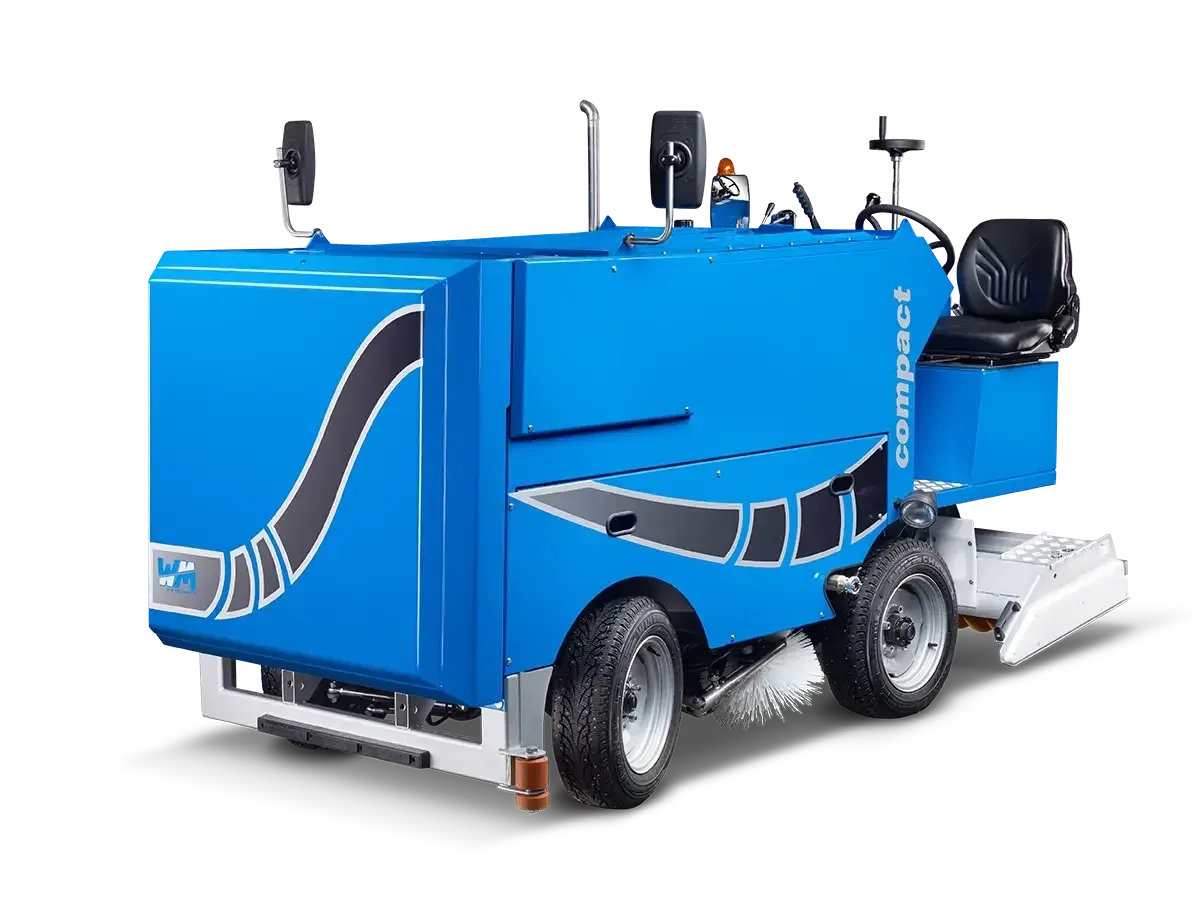
| WM Compact | Lithium electric or diesel | Up to 1,200 m² |
| WM Mammoth | 100% electric | Around 2,600 m² |
| WM Shira | Electric | Up to 2,600 m² |
| WM Evo² | Lithium electric, diesel or petrol | Over 4,200 m² |
Rinks under 300 to 400 m² usually do not need a machine: the ice is maintained by hand.
Zamboni or WM: what is the difference?
Zamboni is another manufacturer's brand. The resurfacers we sell are made by WM technics and do the same job. Very N'Ice is the exclusive official WM technics dealer and service partner for Spain, Portugal and Latin America, and has no connection with the Zamboni brand.