Indoor rink: electric ice resurfacer
A resurfacer with a combustion engine gives off exhaust gases such as carbon monoxide and nitrogen dioxide. In an enclosed building those gases build up over the ice, right where skaters, spectators and rink staff breathe. That is why we always recommend an electric ice resurfacer for an indoor rink.
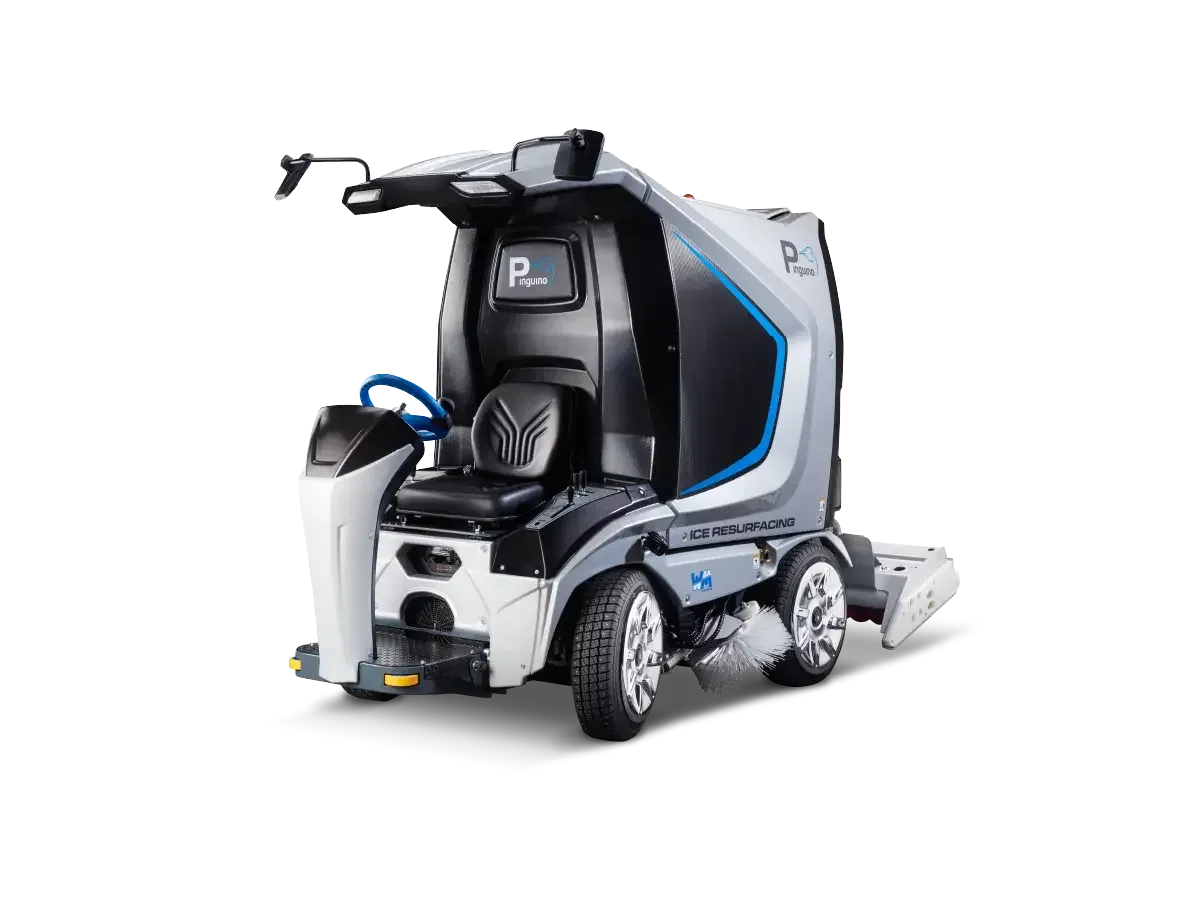
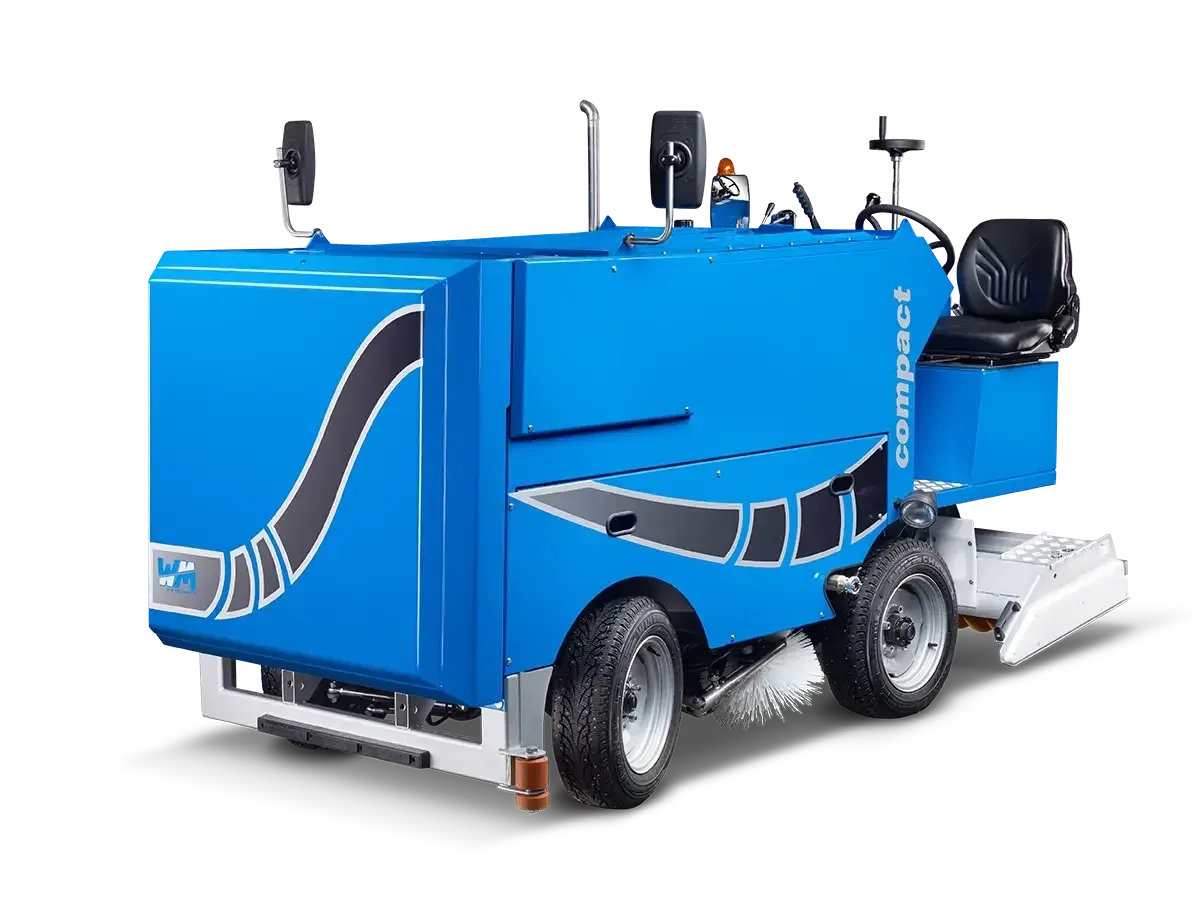
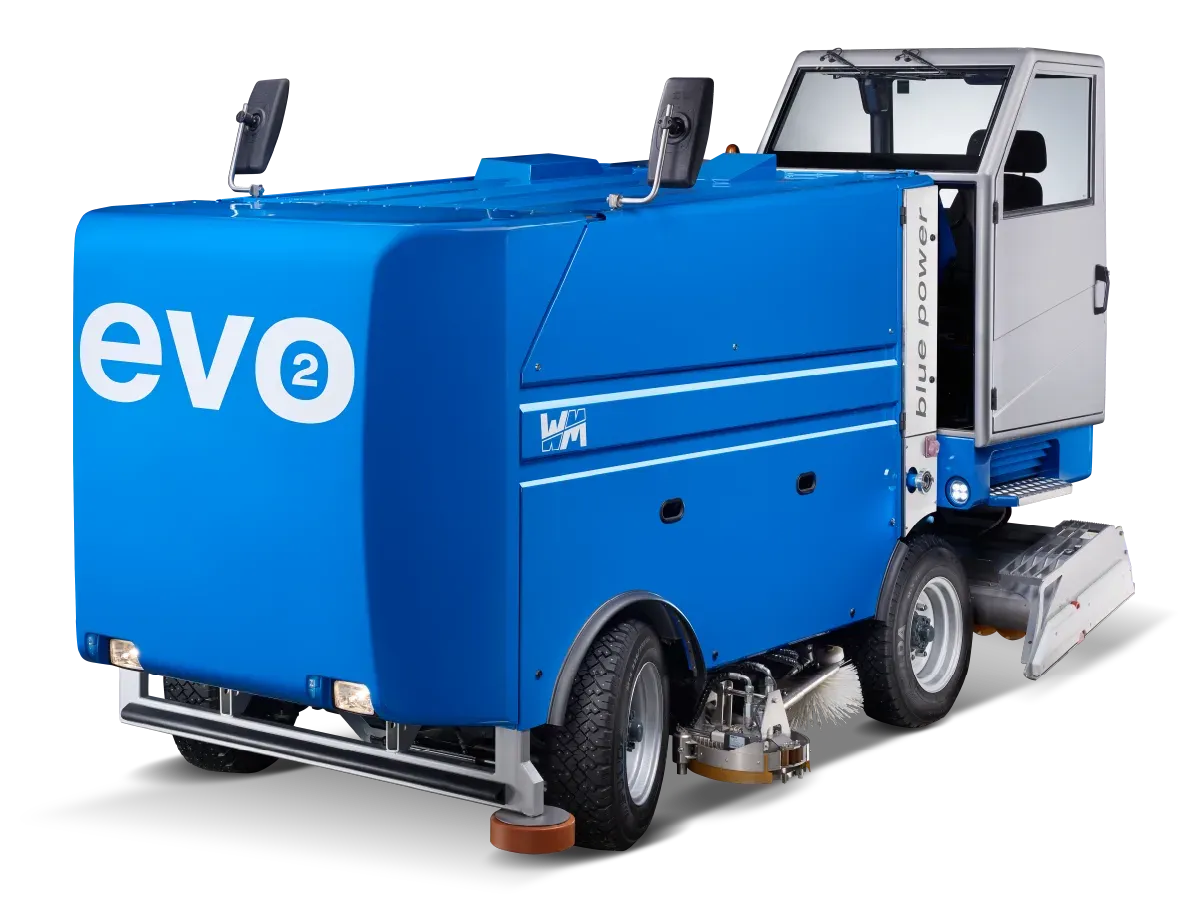
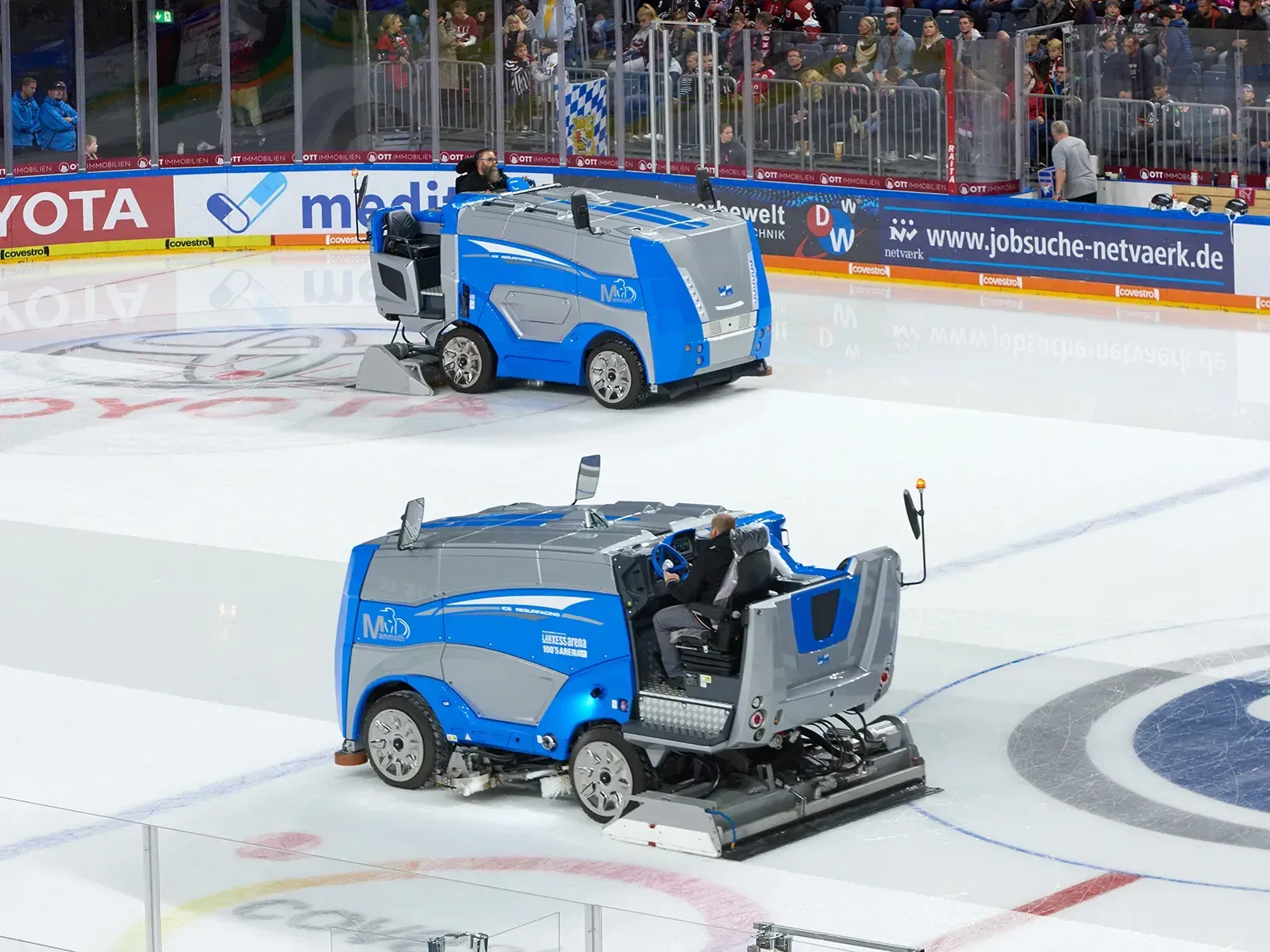
An electric resurfacer gives off no fumes and is much quieter. The WM Mammoth and WM Shira are 100% electric, and the WM Pinguino, WM Compact and WM Evo² come in a lithium battery electric version. The asynchronous motors of the WM Compact and WM Mammoth are maintenance-free.
Outdoor rink: diesel or petrol work too
Outdoors the fumes disperse, so a diesel or petrol resurfacer is a valid option. It refuels in a few minutes and does not depend on a charging point, which is practical where there is no power supply near the place the machine is kept.
The electric version also works outdoors. Choosing it there is a matter of preference: less noise, no fuel smell and no refuelling.
Battery, autonomy and charging
An electric resurfacer needs a charging point where it is kept. The battery is charged between skating sessions and overnight.
An example from the WM sheet: the electric WM Pinguino has an 80 V, 230 Ah BlueLi lithium battery with an autonomy of about 2 h 40 min. Charging to 80% takes about 4 h 20 min at 230 V and about 8 h 20 min at 120 V.
For the other models we give you the battery and charging figures in the quote, for the version you choose.
Versions of each WM resurfacer
| Machine | Versions | Rink surface |
|---|---|---|
| WM Pinguino | Lithium electric or petrol | Up to 800 m² |
| WM Compact | Lithium electric or diesel | Up to 1,200 m² |
| WM Mammoth | 100% electric | Around 2,600 m² |
| WM Shira | Electric | Up to 2,600 m² |
| WM Evo² | Lithium electric, diesel or petrol | Over 4,200 m² |
The WM Evo² is the only one built in all three versions: lithium electric, diesel and petrol.
How to decide
- Indoor rink: electric, for the air that skaters, spectators and staff breathe.
- Outdoor rink with a charging point: electric or diesel, as you prefer.
- Outdoor rink with no charging point nearby: diesel or petrol.
- Very large rink or very heavy use: the WM Evo², in any of its three versions.